ZELTWANGER Group Successfully Certified to ISO 14001
Read more


The ZELTWANGER Maschinenbau GmbH is expanding its high-precision machining capabilities with Hale Machining, a process for the high-precision production of seal grooves and ultra-flat functional surfaces. When seal grooves or flat functional surfaces are machined conventionally using a rotating end mill, curved tool marks typically remain on the surface. If these marks cross the sealing contour, they can form potential leakage paths from the inside to the outside.
With Hale Machining, by contrast, the surface is generated by a straight, planing-like cutting motion. This produces linear tool marks that can be specifically aligned along the sealing contour. In this way, potential leakage paths can be reduced, while also minimizing the need for subsequent surface finishing.
The process is particularly relevant for applications with stringent leak-tightness requirements, such as high-vacuum environments used in semiconductor manufacturing equipment and processes.
Using the hyperMILL CAM software from OPEN MIND in combination with specially adapted tooling technology, we have successfully integrated the process into our manufacturing operations with a high level of process reliability.
The result is a reproducible manufacturing process for components with demanding requirements in terms of precision, leak tightness, and surface quality.
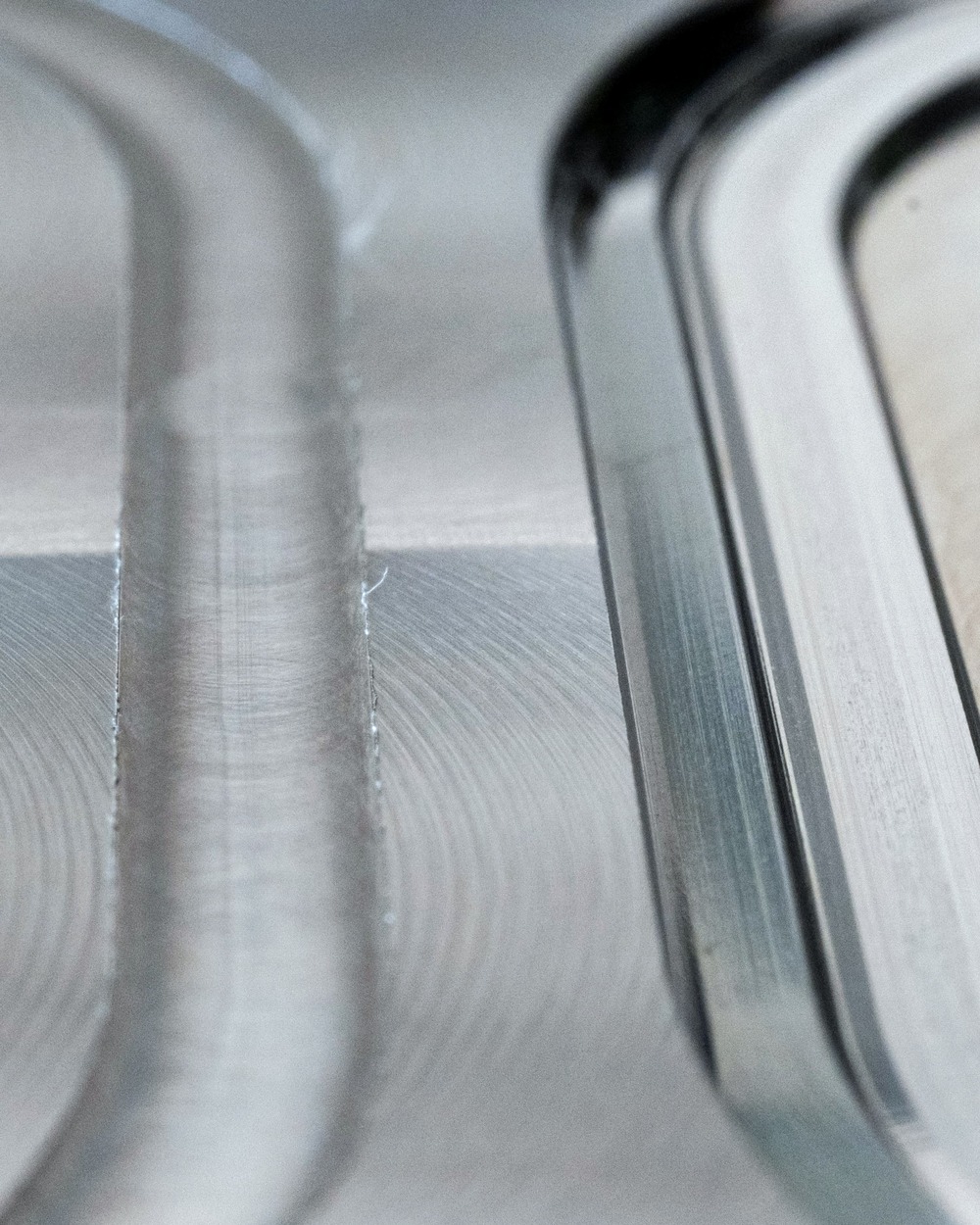
Left: conventional milling with a rotating end mill.
Curved tool marks can create potential leakage paths.
Right: Hale Machining.
The straight cutting motion produces linear tool marks that can be specifically aligned along the sealing contour.
You need to load content from reCAPTCHA to submit the form. Please note that doing so will share data with third-party providers.
More InformationYou are currently viewing a placeholder content from Facebook. To access the actual content, click the button below. Please note that doing so will share data with third-party providers.
More InformationYou are currently viewing a placeholder content from Hubspot Embedded Content. To access the actual content, click the button below. Please note that doing so will share data with third-party providers.
More InformationYou are currently viewing a placeholder content from HubSpot. To access the actual content, click the button below. Please note that doing so will share data with third-party providers.
More InformationYou are currently viewing a placeholder content from Hubspot Meetings. To access the actual content, click the button below. Please note that doing so will share data with third-party providers.
More InformationYou are currently viewing a placeholder content from reCAPTCHA. To access the actual content, click the button below. Please note that doing so will share data with third-party providers.
More Information